
Why Productivity Advice Fails SMEs (And What Actually Moves the Needle)
Most productivity advice for small businesses - a new app, work harder, hustle more - fails, because it skips the foundation. Drawing on a Bloomberg Adria panel, here's why generic fixes don't stick in an SME, and the order that actually works: processes, then technology, then people.
A founder feels the company is slow, so they buy a tool. Or they push the team to work harder. Six weeks later nothing has really changed - the tool is half-used, the team is tired, and the bottleneck is exactly where it was. If that sounds familiar, it's not because you picked the wrong app. It's because almost all productivity advice starts in the wrong place.
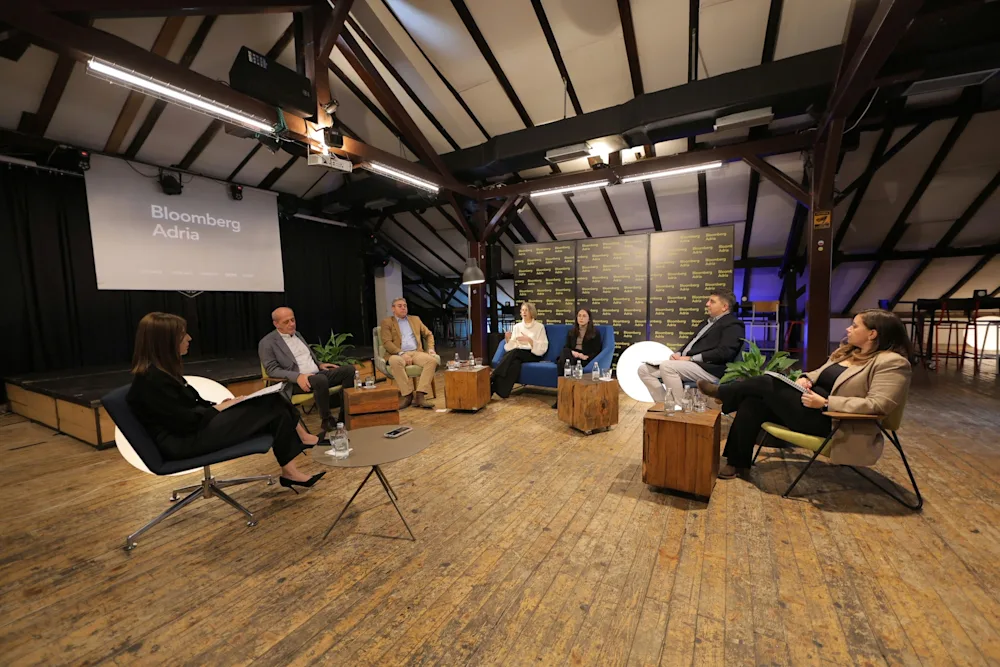
On Bloomberg Adria's Not So Small Talk round table on productivity, Natasha Razmoska put it simply: "Productivity is the result of the synergy between processes, people and technology. These are the three key elements in every organisation, and they must be in balance. If any one of them is off, problems appear across the whole organisation - work slows down, mistakes creep in, productivity falls."
That's the reframe. Productivity isn't a tool you buy or hours you add. It's the balance of three things - processes, technology and people - and they only work in that order. Here's why the usual advice fails, and what to do instead.
Why the usual advice fails
Generic productivity advice targets symptoms. "Buy this software." "Try this method." "Get the team to do more." It feels like progress because you've done something. But if the underlying work is unclear - nobody's quite sure who owns what, or how a task is supposed to flow - a new tool just lets you do the chaos faster. You've automated the mess, not removed it.
That's the trap small companies fall into again and again: reaching for technology or effort before the work itself is defined. The fix isn't more tools or more hours. It's getting three things in the right sequence.
Step 1: Map your processes - before any software
The starting point is mapping. "The organisation should map all its processes and standardise them, so that every employee knows exactly what their role is, how they'll work, and what the clearly defined goals are," Natasha said. "If processes are unclear, work gets delayed, it isn't done correctly, mistakes appear, and productivity drops."
This is the unglamorous step everyone wants to skip, and it's the one that actually moves the needle. When the flow of work is written down and standardised, people stop improvising, stop duplicating each other, and stop dropping things in the gaps between roles. It's the same discipline we walked through in documenting your first 20 processes.
First move: Pick your single most important process - the one closest to revenue - and map it end to end. Who does what, in what order, to what standard. Don't buy anything yet.
Step 2: Then add technology - to automate what's now clear
Only once a process is mapped and standardised does technology earn its place. Now a tool has something solid to automate: a defined flow that can be made faster and more consistent, instead of a moving target.
And here the news is good for small budgets. "When it comes to financial resources, technology - especially AI - is now very accessible," Natasha noted. "A company can introduce new tools often, and it isn't a big cost." The exception is production environments, which are more complex: there, management has to decide which elements matter most and what to digitalise first to actually see results.
First move: For the process you just mapped, ask one question - which step is repetitive and rule-based enough to automate? Start there, not with a platform that promises to fix everything.
Step 3: Then the people step everyone skips
This is where most transformations quietly die. "Even if you have the best technology in the company, if people don't know how to use it, you still have a problem," Natasha said. The third step is putting the right people in the right place, and training them - on the tools, and on the standardised processes.
Technology doesn't create productivity. People using technology well, inside a clear process, create productivity. Skip the training and you've spent money to make your team feel slower.
First move: For every tool you introduce, budget time for training and name an owner. A tool nobody's been taught to use is a cost, not an asset.
Where AI actually helps - and where it stops
AI is the productivity story of the moment, so it's worth being precise about what it does well. In strategy work, the gains are real: "We do market research, internal and external analysis - a process that normally takes a lot of time," Natasha explained. "With some AI tools, we cut it from several days to several hours."
But there's a hard limit. "The key is that we can't fully rely on AI. In the end, a human - based on those tools, and on their own experience and knowledge - has to decide what to apply and how." AI compresses the legwork; judgement still belongs to a person. The employee's role shifts from doing the research to choosing the right tools and deciding what the output means. If you're wondering where to start, we mapped the first practical places an SME should use AI.
Why this matters more now
This isn't a nice-to-have. Companies on the global market face rising competition - especially from lower-cost countries - and constant price pressure, while at the same time the market demands higher quality and higher standards. You're squeezed from both sides: do it cheaper and better. The only way through is to get processes, technology and people into the right order so the work itself produces the quality the market expects. That squeeze is the real reason productivity has stopped being optional.
What to do next
Stop shopping for the magic tool. The order is the whole point: map the process, standardise it, then automate it, then train your people. Do it for one process, see it work, then move to the next.
If you want a structured starting point - a clear read on which processes are actually dragging your productivity and in what order to fix them - that's what the Business Pulse diagnostic is built to give you, and the Build track turns that map into standardised, documented processes your team can actually run. Improving productivity, as the panel concluded, comes down to setting a strategy and clear goals, and tracking them in partnership with the people who do the work - not buying your way out of an unclear process.