What a Good Business Diagnostic Should Leave You With
You are about to pay real money for someone to tell you what is wrong with your business. What should you actually walk away with? Not a heavy report you will never open twice. A good diagnostic goes deep enough to prove it really looked, then leaves you with a short, clear set of things to do. Here is what you should be left holding, and the red flag that tells you the whole thing will change nothing.
At some point most owners consider it. Things are not quite working, you cannot put your finger on why, and someone suggests a business diagnostic: pay a consultant to look under the hood and tell you what is actually wrong. It is a good idea. It is also money you do not spend lightly, and there is a fair question underneath it: when it is done, what should you actually be left holding?
Most people picture a document, and judge it by weight. A thick, professional-looking report feels like value. Sixty pages, charts, an executive summary, the works. It landed with a thud, so it must be thorough.
That instinct is exactly backwards. Some of the most useless diagnostics ever delivered came as the heaviest reports. What you should walk away with is not a big document at all. So here is what a genuinely good one actually leaves you with, so you can tell the difference before you pay, and hold your consultant to it after.
It goes deep, and shows you it went deep
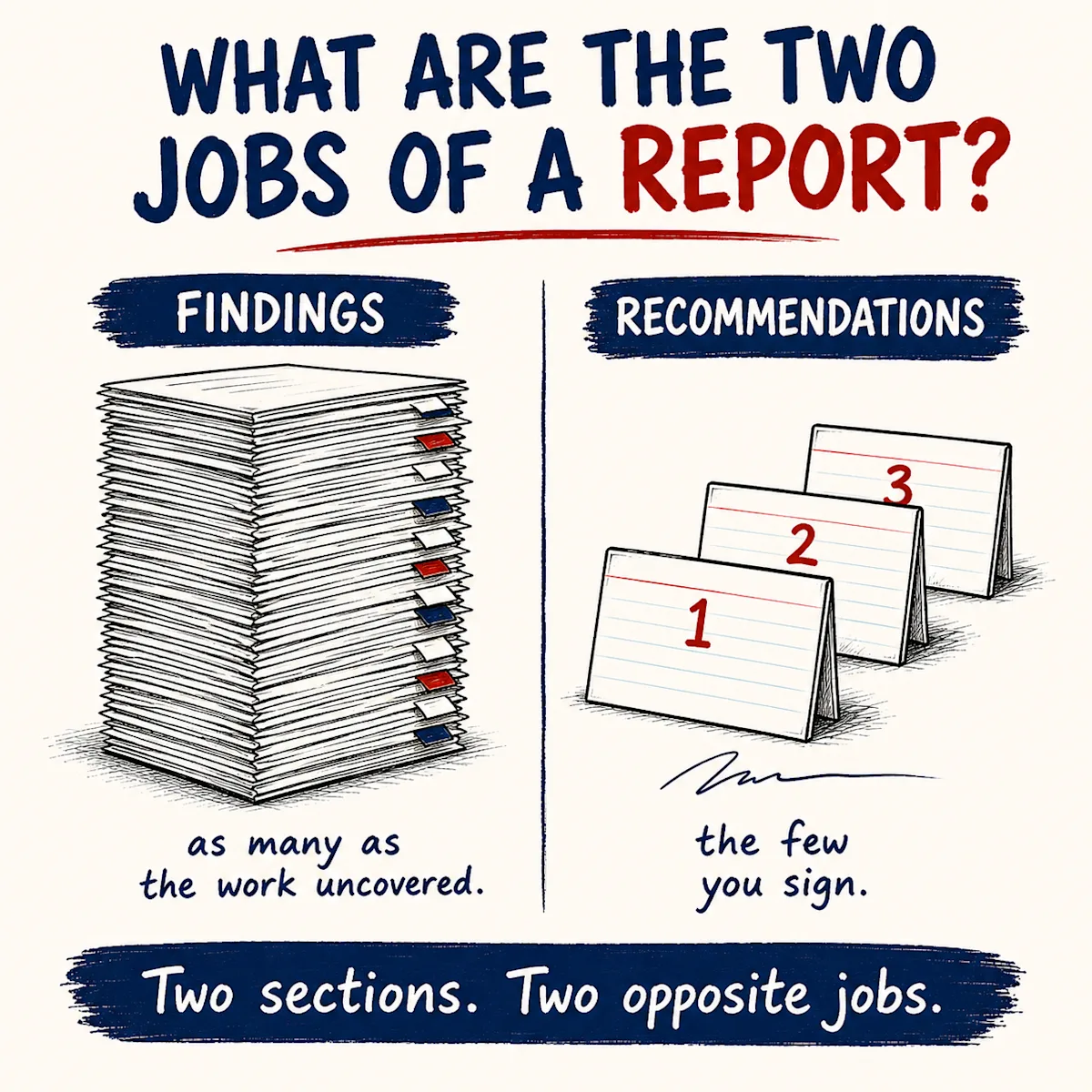
The first half of a good report is the findings: everything the diagnostic uncovered. And here, you want a lot. You want to see that the consultant did not just nod along to the problem you described on the first call and write it up. You want evidence they turned over stones you did not know you had, that they looked at how you price, how you deliver, where your time goes, what your numbers actually say.
So a long findings section is a good sign. It is proof of the work, proof they looked properly rather than confirming your first guess. If a diagnostic comes back agreeing with exactly what you said in the first meeting and nothing more, you did not buy a diagnostic. You bought an echo.
Then it tells you what to actually do, and it is short
Here is where the good report and the useless one split apart.
After all those findings, a good report does the hard thing: it decides. It narrows everything it found down to a few clear recommendations, the handful of things you should actually focus on. Not twenty. A few. Three or four priorities you could write on the back of a napkin and remember.
This is the part you are really paying for, and it is the part the weak reports skip. Anyone can hand you a list of twenty things that are wrong. That is not help, that is homework, and it quietly hands the hardest decision, which of these twenty matters most, right back to you, the person who hired someone precisely because you could not make that call alone.
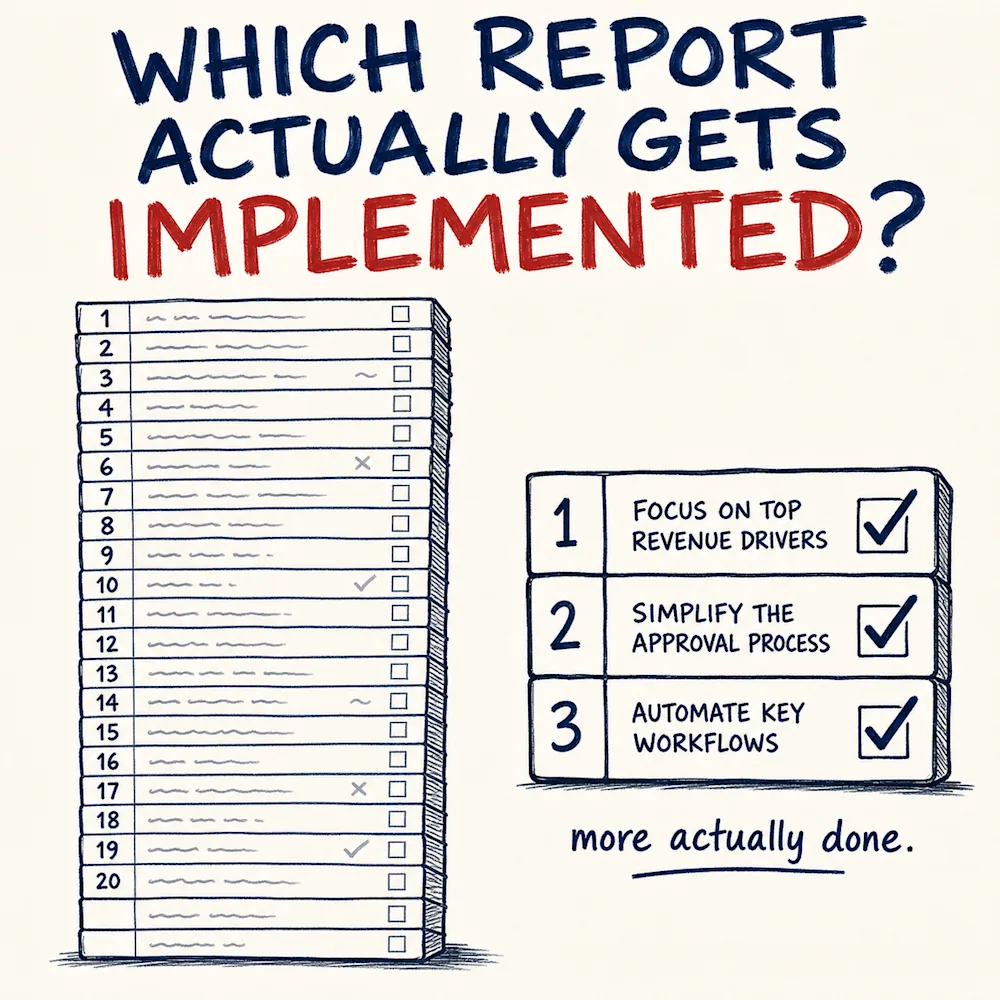
There is a well-worn truth behind this. A business handed three focused priorities gets more of them done than a business handed twenty. Not because the owner is lazy, but because twenty is paralysing and three is doable. If your report leaves you with a short, clear list of what to do first, it was built to be acted on. If it leaves you with a long one, it was built to be admired.
Every recommendation should actually change something
Look closely at those recommendations, and ask a simple question of each one: if I do this, does something real change?
There is a difference between a recommendation that just warns you ("keep an eye on your cash flow") and one that changes how the business runs ("replace the manual invoicing that is causing the cash-flow gaps"). A good report is mostly the second kind. It does not just point at problems and back away; it tells you what to put in place so the problem stops happening.
If most of the recommendations are soft warnings and things to "monitor" or "be aware of", the report is describing your business, not fixing it. You want recommendations you can act on and then check off, not a list of worries with page numbers.
It gives the priorities a timeline
"Priority" is a word that means nothing on its own. A good report puts its recommendations in time: what to tackle in the next few months, what comes after that, what belongs to the longer haul. That sequence is part of the value. It stops you from trying to fix everything at once, which is the fastest way to fix nothing.
It tells you the hard truth in a way you can hear
A good diagnostic will find things that are uncomfortable. That is the job. But how it tells you matters, because a finding that makes you defensive is a finding you will argue with instead of act on.
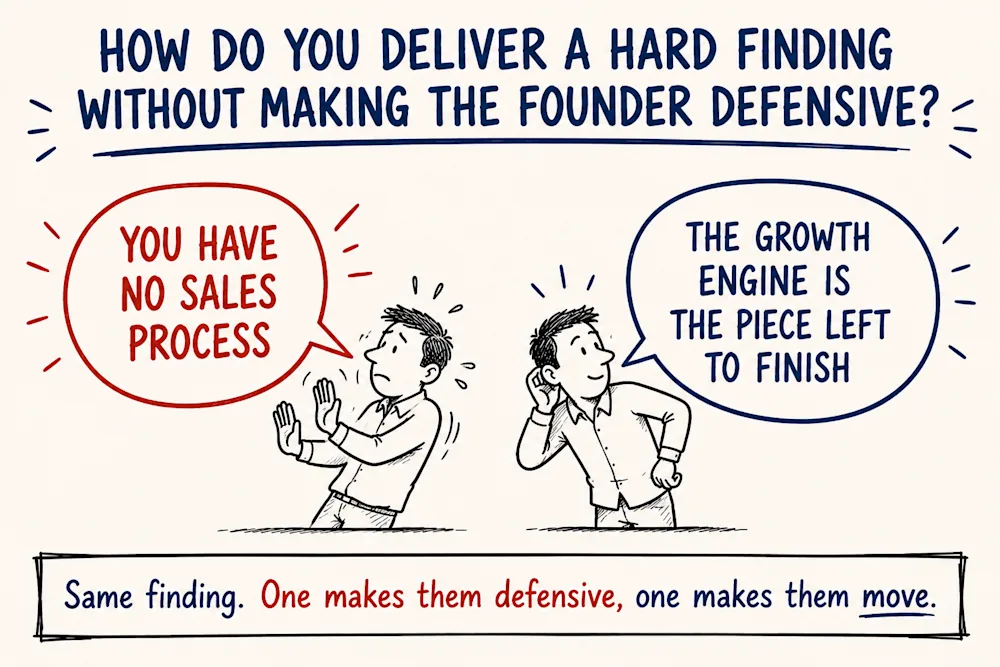
The best reports name the real constraint without turning it into an accusation. "You have no sales process" and "the growth engine is the one piece still left to build" can describe the same gap, but one makes you bristle and the other makes you want to get started. A good consultant has built something real with you in mind, points at the few things holding it back, and frames them as the work still to do, not as a verdict on you. Firm on the facts, easy on the person.
The red flag, in one question
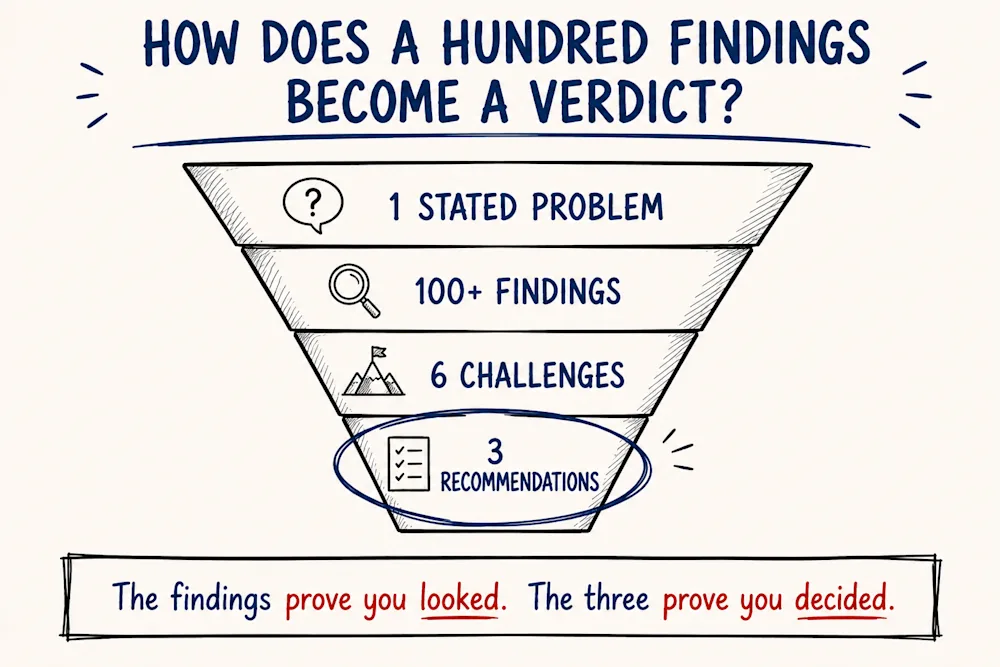
Here is the simplest test, and you can apply it the day the report lands. After you have read it, could you tell a friend, in one breath, the three things you are now going to do?
If yes, you got a verdict. Someone did the work, made the hard call, and handed you a plan you can act on. That is a good diagnostic.
If instead you are holding a heavy document full of correct observations and you honestly could not say which three things to start with, you got a binder. It may be accurate, it may be thorough, and it will still change nothing, because the one decision you were paying for, what to actually do first, never got made.
A good business diagnostic is not measured by how much it found. It is measured by how clearly it told you what to do about it.
This is exactly how we built the Business Pulse diagnostic: go deep across the whole business, then hand you a short, sequenced set of priorities you can actually act on, not a binder. If you want a first sense of where your business stands before any of that, the free business health check takes about four minutes.