Most AI Companies Are Built to Die
The AI tools you are starting to rely on are being sold below cost, and many of the companies behind them will not survive the real price. Here is how to tell whether you are building your business on AI or with it, and why only one of those is safe.
There is a good chance one of your favourite new tools is an AI app, and an even better chance it feels almost too cheap for what it does. It is. You are not paying the real price for it, because someone else is covering the rest of the bill, and they will not do that forever.
This is not a reason to avoid AI. It is a reason to be deliberate about how you let it into your business, because the cheap years are a window, and the way you use that window decides whether you come out of it with an advantage or a dependency you cannot afford. Let me show you the difference, and a simple way to tell which side of it you are on.
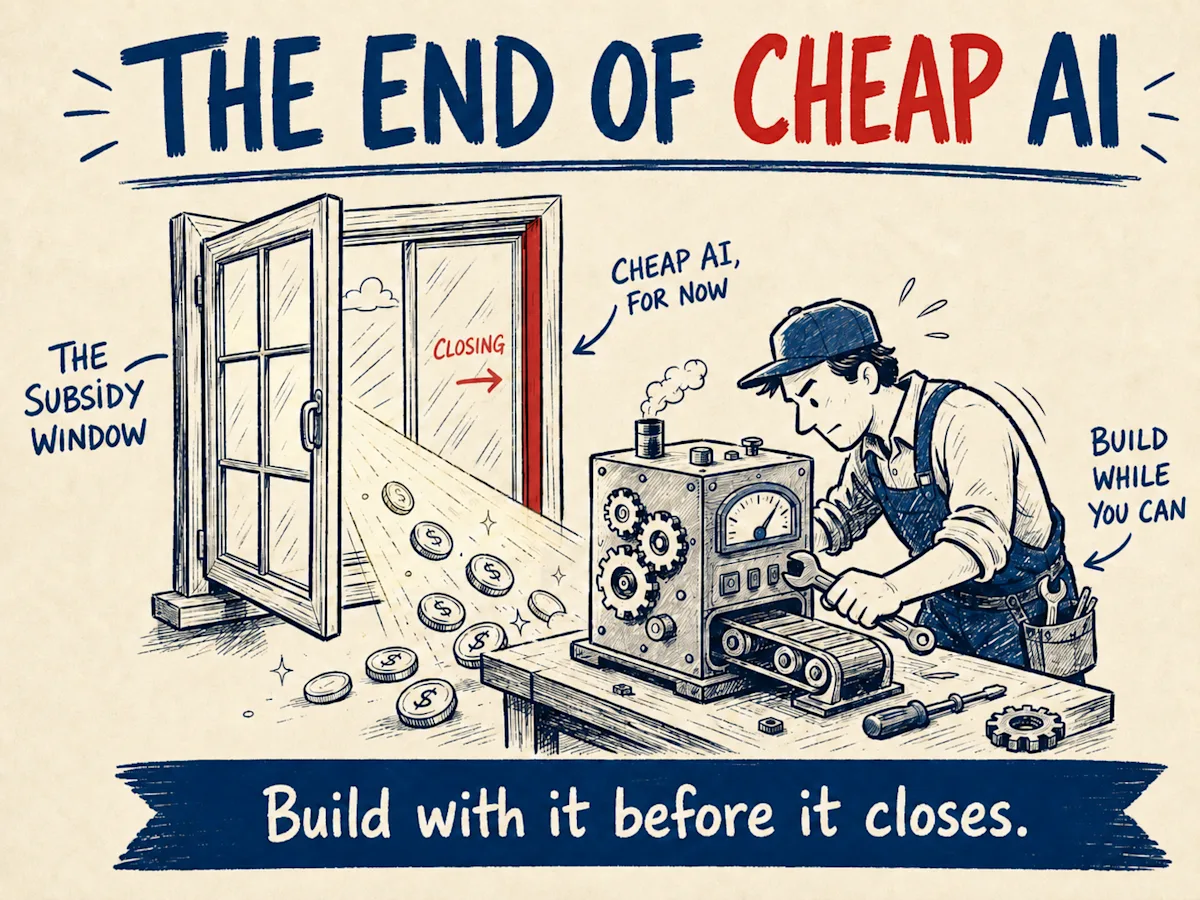
Cheap AI is somebody else's money
Think back to how cheap an Uber ride was around 2014. It felt like a permanent gift, but it was a strategy. Investors were paying part of every fare to make the habit stick, and once the habit was set and the competition gone, the price drifted up to what the ride actually costs. The cheap phase was customer acquisition wearing the costume of a price.
AI is in that exact phase now. The biggest AI tools lose money on the service they sell you. ChatGPT alone is estimated to cost in the region of seventeen billion dollars a year to run, while only a small fraction of its users pay anything. That gap is funded by investors who are betting they can make you depend on it now and charge you properly later. And "later" is coming into view, because these companies are heading for the stock market, where shareholders expect them to actually make money. Even Uber itself, this year, burned through its entire annual AI budget in four months because the tools its engineers loved cost far more than anyone had planned for.
Most AI companies are built to die
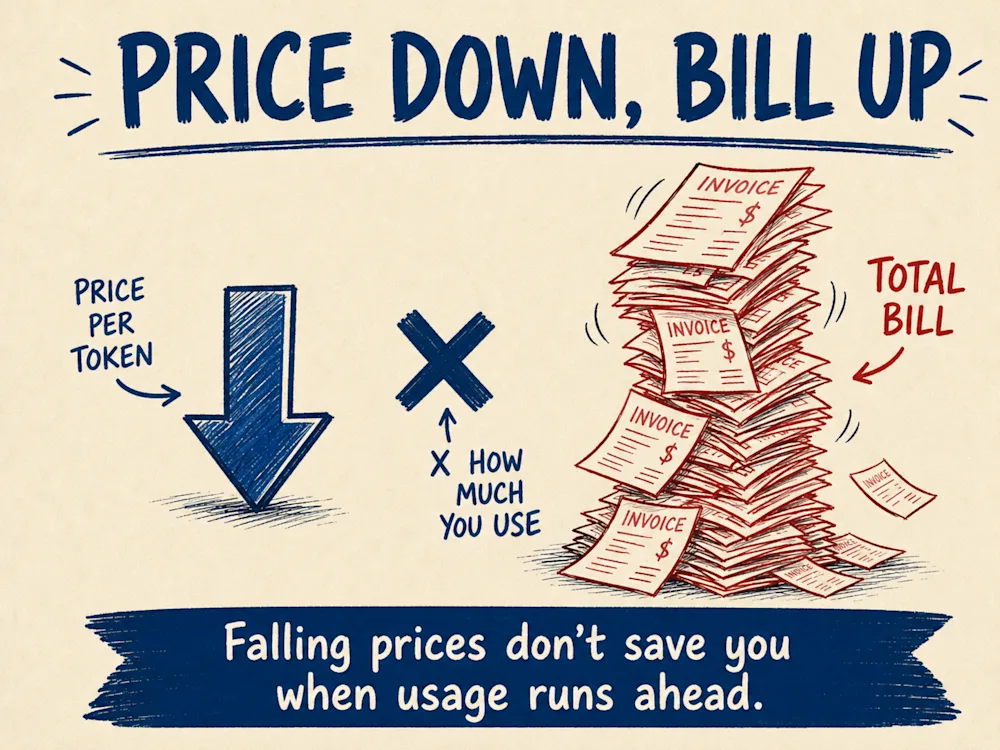
Here is the part to keep in mind before you wire any AI tool into your operation. A lot of the companies selling those tools have no real margin. Some of the most popular AI products run at breakeven or a loss on every customer, and founders in the field describe their margins, openly, as abysmal. They survive on two things that will not last: investor money, and the artificially low price of the AI underneath them. When either tightens, they face the same fork you would: put prices up, or go under.
So the tool you happily depend on today might cost three times as much next year, or quietly disappear when its funding runs out. This is not a fringe worry. Around 60% of companies that watch their AI spending closely have already started pulling back and cutting tools to control the bill. The reckoning has begun, and the businesses caught out will be the ones who built something important on a tool they did not control and could not afford at its real price.
The question that protects you: on AI, or with AI?
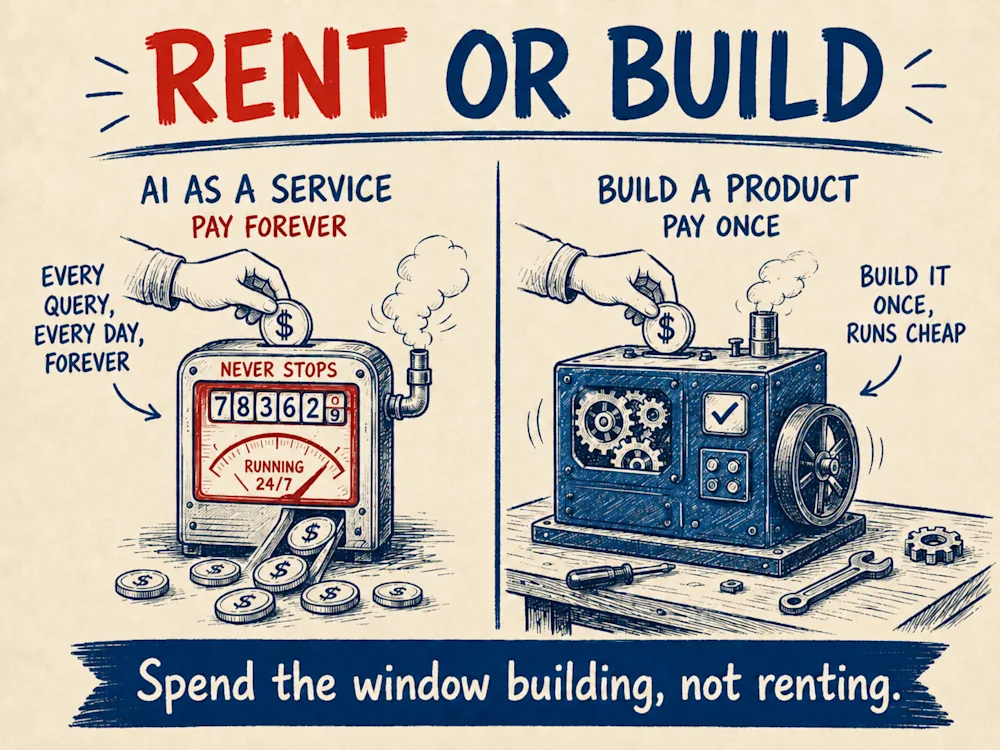
One question sorts the safe from the exposed, and you can ask it about anything in your business: are you building on AI, or with AI?
Building on AI means the tool is the thing. Take the AI away and there is nothing left underneath, so when its price moves or it shuts down, you move with it. Building with AI means the value is something you own, your process, your data, your customer relationships, your know-how, and AI sits on top as a layer that makes it better. If the AI changes, you swap it, shrink it, or do without it, and the business stands.
As an owner you meet this twice. Once as a buyer, in the tools you bring in to run your business. And once as a builder, when you add AI to your own product or service. The same question keeps you safe in both.
The buyer test: if this tool vanished tomorrow, what breaks?
You already know how to think about this, because it is the same way you think about a supplier who provides 40% of your stock, or one client who is half your revenue. It is concentration risk, and an AI vendor is no different. Before you let a tool become load-bearing, ask three plain questions:
- If this tool doubled its price tomorrow, would I still use it, or would it break my numbers?
- If it disappeared next month, how long and how painful is it to switch?
- Is my own data and work trapped inside it, or could I take it elsewhere?
You do not have to avoid the tool. You have to avoid being unable to live without it. Keep your data portable, know your alternative, and do not let a single below-cost vendor sit at the centre of how you make money.
The builder move: spend the cheap window building, not just renting
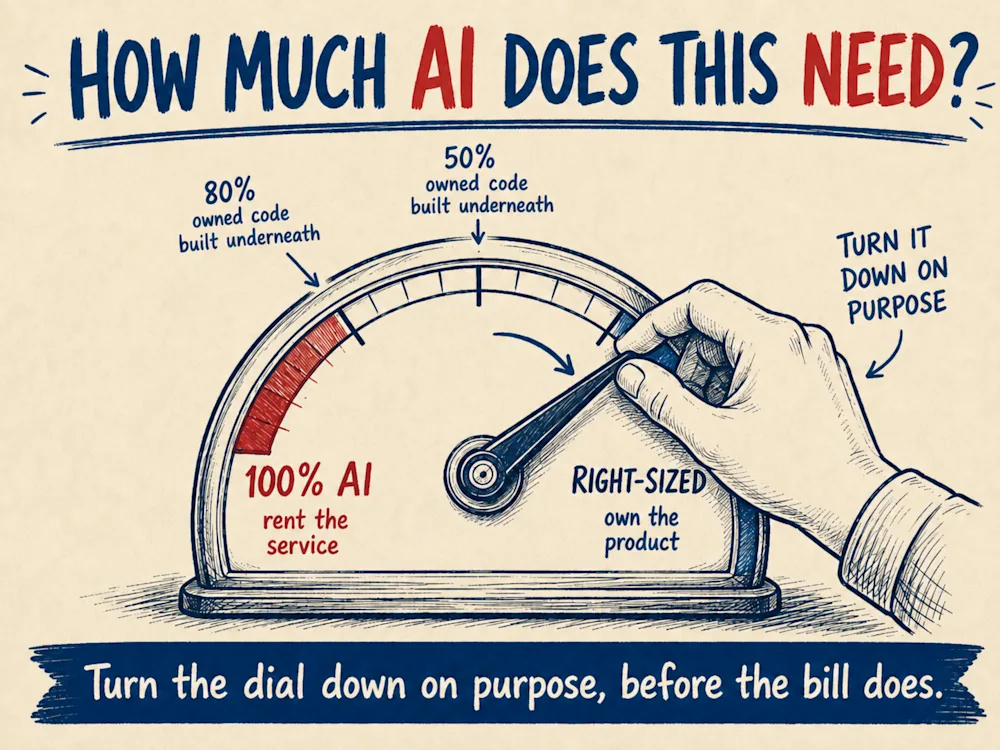
Here is the opportunity hiding inside the warning. Cheap AI is not only a discount to enjoy, it is a chance to build. There are two ways to spend it. You can spend it running something, where every customer and every day burns more, forever. Or you can spend it building something, using cheap AI now to set up systems, clean up your data, automate your routine work, and design how things should run, so that what you are left with keeps paying off long after the cheap years end. Same spend, opposite results.
And you almost certainly need less AI than the hype suggests. In my doctoral research on how smaller service businesses actually adopt AI, the roadmap that keeps proving itself puts AI in a deliberate order: map the work, automate the friction, add AI, then humanise. You map what actually happens in your business, automate the simple repetitive friction with ordinary tools first, bring in AI only where it genuinely adds judgement or handles language, and then give your people back the work that needs a human. AI comes third, not first. The skill is using as little of it as the job actually needs, because that is what keeps you both cheaper and free.
What "built with AI" looks like
We learned this the hard way on our own product. We built an engine to take a company's messy spreadsheets and answer real questions from them, and the first version leaned entirely on AI. It was quick to build and looked wonderful, right up until we asked it for a number it had to calculate rather than look up. It did not admit it could not. It invented one, beautifully formatted and completely wrong. We told that fuller story in why AI gives businesses the wrong number, confidently.
So we rebuilt it on a rule we now treat as law: the AI model never does the maths. Plain, ordinary code does the calculations, and the AI only understands the question and explains the answer. That made it trustworthy, but it did something else too. The expensive, hard part became code we own that costs almost nothing to run, and the AI shrank to a thin layer at the edges. We used the cheap window to build, instead of renting a service that would have billed us forever. The day AI prices rise, the heart of what we built will not even notice. That is the whole point.
What to do next
So before the cheap years end, take four steps.
- List the AI tools your business now leans on. Not the ones you try, the ones you would miss.
- For each, ask the buyer test. If it doubled in price or vanished, what breaks, and how fast could you switch?
- Where AI is becoming core, make sure the value is yours. The process, the data, the relationship, not just the model. That is the difference between with and on.
- Use the cheap window deliberately. Map and automate the routine parts that never needed AI, and reserve AI for where it truly earns its place.
If you want the practical map of where to begin, we wrote up the first places an SME should put AI to work, and a simple framework for AI-ising your business is the natural next read. For the bigger strategic picture, see the three layers of AI value.
And if you want a clear-eyed look at where AI helps you, where it exposes you, and what to own before the cheap years end, that is exactly what a Business Pulse AI session is for.
Cheap AI is the best gift a business owner has had in a decade. The mistake is to treat a gift as a foundation. Use the window to build something that would still stand if it closed, because one way or another, it will.