How a Business Diagnostic Upgraded Echo, a Skopje Software Company
Echo built a decade of success - 100+ projects for the likes of Vodafone, Porsche and Volkswagen - on quality and referrals alone, with no marketing or sales team. Then ambition outgrew the model. Here's what a full business diagnostic revealed about the Skopje software house, and the transformation it set off.
There's a version of success that quietly becomes a risk. Echo, a software company from Skopje, is a near-perfect example - and its story is one of the clearest illustrations I know of what a business diagnostic actually does. (The full story was covered by Inovativnost.mk; here's the business side of it.)
Founded in 2016, Echo built an impressive portfolio - more than 100 projects, working with globally known brands like Vodafone, Porsche, Volkswagen, Angry Birds and Virgin. The remarkable part: it achieved all of that without a classic marketing or sales function. For a decade, the work spoke for itself and happy clients referred the next ones. That's a powerful endorsement of quality - and, on a long enough horizon, a serious question mark over sustainability.
Referrals built the company - and hid the risk
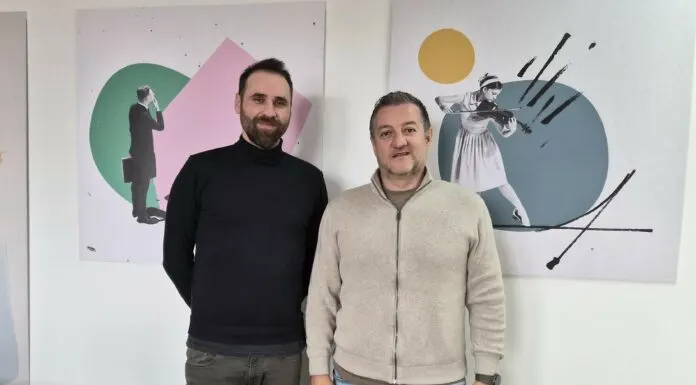
The question surfaced exactly when Echo's ambition grew: to enter new markets and build its own products. That's when the long-standing relationship with business consultant Dancho Dimkov (BizzBee Solutions) turned into a comprehensive business diagnostic - run as part of the Swiss modernisation project delivered by Swisscontact.
The logic was simple. As Dancho put it, you can't build a strategy for winning new markets without first understanding the company's real position. So the diagnostic looked across the whole business - marketing, sales, finance, and human resources - to find both the genuine strengths and the weaknesses quietly capping growth.
What the diagnostic found - and why it was all connected
The findings were clear, and largely what you'd expect of a strongly technical company:
- No real marketing or sales system - referrals had been doing that job. A strong signal of quality, but it meant long-term growth wasn't predictable and Echo had no real control over the inflow of new clients, which ultimately shows up in liquidity.
- Revenue concentrated in a few clients - a stability risk if any one of them stepped away.
- Deeply technical, business functions underdeveloped, with management heavily centralised around the owner.
- Cash flow wasn't tracked precisely - which can create a distorted picture of the company's true state.
The most important insight wasn't any single finding. It was that none of them were isolated - and I'll come back to why that changed how I work.
The founder's reckoning
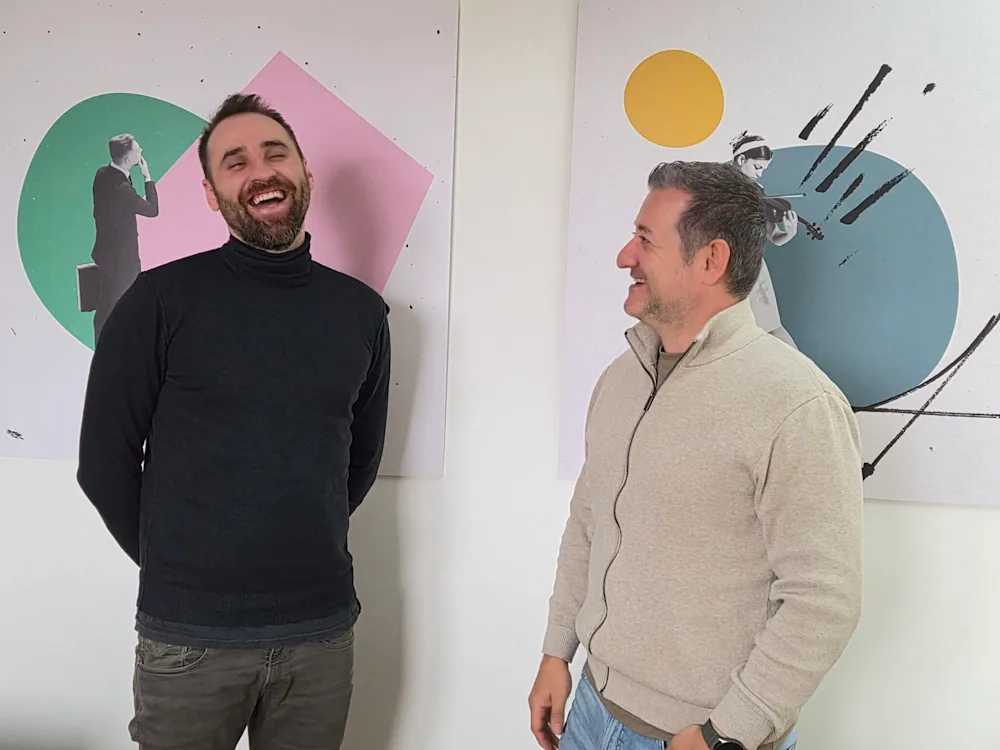
Echo's owner, Miki Dimitrov, is candid that these weaknesses weren't entirely unknown - but their real significance only landed after the systematic analysis. "Entrepreneurs often recognise their weaknesses," he notes, "but when they don't have a clear way to solve them, they push them aside and keep focusing on what works." For Echo, what worked - stable clients, a steady flow of projects - created a feeling of security that quietly masked the missed opportunities for growth.
The cash-flow realisation hit hardest. "One thing is to have clients and a contracted project value," Miki says. "Quite another is the real money landing in your account, and your liquidity. Only now, after we introduced a new financial tool, do I have a clear picture of that difference - a full overview of the finances in real time. That's been incredibly useful for planning."
From a feeling of control to an actual system
Acting on the findings, Echo began a shift toward a more structured way of operating. Because it works on large, complex projects, mass marketing was never the answer - so the new approach is relationship-based: carefully chosen clients and an individual approach to each.
In parallel, the organisation is decentralising. Decision-making is gradually moving out to team leaders, which reduces dependence on the owner and frees him to focus on strategy and direction. Clearer operational processes mean every team member can see how their work fits the wider business strategy - more alignment, less bottleneck.
From project executor to product creator
One of the most interesting parts of Echo's story is that it's building its own products alongside client work: Guli (smart magnets already exported and used in tourism and entertainment), Feder (turning restaurant menus into an interactive channel between venues and guests), Martinas Cooking (an app with tens of thousands of users), and Info Soobrakaj (a traffic-info service). The point isn't novelty - it's diversifying revenue and reducing dependence on the pure services model.
"We don't see these as isolated experiments," Miki explains, "but as part of a much broader strategy. We functioned for a long time as a classic outsourcing company - but that model has its limits. Through products like Guli, Feder or Martinas Cooking, we're learning to think in terms of products: how to scale, how to develop ideas with market potential, how to step beyond the local market. It takes time and focus, but I believe that's where the future is."
The bigger picture: the era of selling hours is ending
Echo's situation mirrors Macedonia's place in global software. The advantages are real - strong engineers, competitive costs, proximity to European markets - but Miki is clear they're no longer enough in an age where AI is reshaping how value is created and delivered. His warning to other company leaders is blunt: "Don't sleep. The industry, especially under AI, is changing at incredible speed. The era when specialised programmers could sell their hours by the clock is over. Every company will have to seriously invest in knowledge and in upskilling its teams - especially in AI."
The real lesson: don't wait for a crisis
Miki's advice to other technical companies wondering whether and when to bring in a business advisor is the heart of the story:
"Don't wait for a crisis to seek outside help. We functioned brilliantly on technical expertise for a long time, and it created the illusion that everything was fine. But when our ambition to grow exceeded the capacity of the existing model, it became clear we needed a different perspective. The right moment to hire a business advisor isn't when things go badly - it's when you want to take the next step and aren't sure your foundation is stable enough for it. Our experience showed that technical excellence without business structure is like an engine without a gearbox: you have power, but no control over the direction."
A note on method - why Echo changed how I diagnose
Echo was a turning point for me professionally, too. It was the first company where I applied the full diagnostic, and it taught me that the classic approach - analysing each department in isolation - misses the real picture. At Echo, the problems weren't contained in one box: the absence of a sales structure undermined financial predictability, which in turn distorted HR planning. Everything was connected.
That's why I redesigned the methodology to start from the founder's problems rather than the departments, and trace each problem across the whole company. It's the same principle behind our 7-step diagnostic framework, and why "we have a sales problem" is so often a symptom of something deeper. The other lesson is cultural: abroad, hiring a consultant is a normal part of business; here, there's still a perception that a consultant is a cost rather than an investment - and, ironically, the companies that most need a structured look are often the ones least likely to ask for one.
What to do next
Echo's story makes the point better than any pitch: technical excellence is the start, not the finish. Real growth comes when that excellence is paired with structure, a system, and a clear view of the numbers. If your company is good at what it does but you're not sure the foundation is ready for the next step, that's exactly the moment for a Business Pulse diagnostic - the same full, founder-first diagnostic that gave Echo its gearbox.